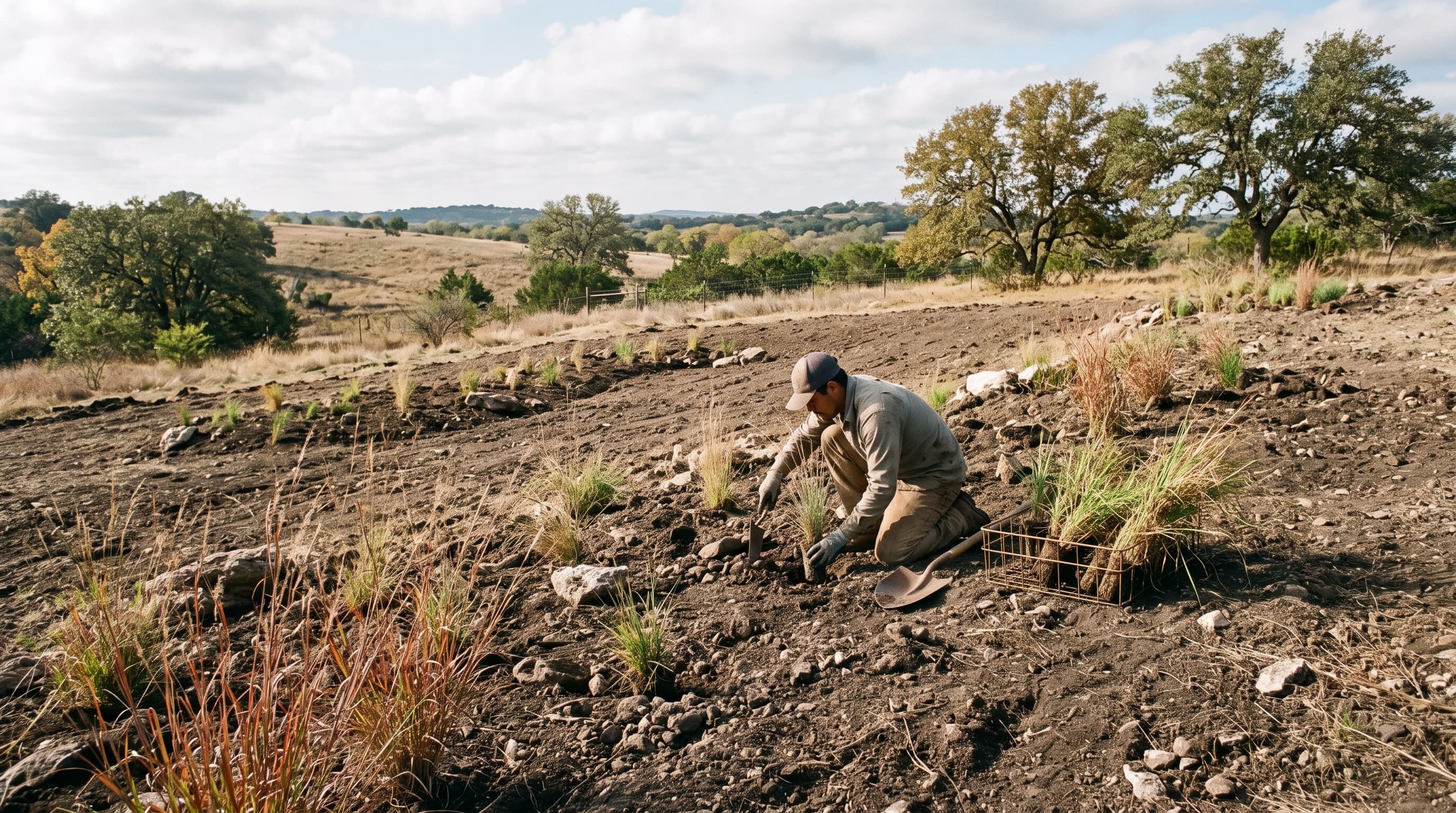
September in Seguin is the window. The soil is still warm, the fall rains are usually on the way, and for anyone with a bare lot or a ranch in Guadalupe County, it is the best time to get seed in the ground.
Myth: Any "Texas Native" seed mix works in Seguin
Many landowners buy a generic Texas native mix from a big-box store or an online catalog and expect it to thrive. This is a mistake. Texas is too large for a single "native" category. A seed mix designed for the sandy soils of East Texas or the arid plains of West Texas will struggle or fail in our soil.
Guadalupe County sits in the Texas Blackland Prairie ecoregion. This is the eastern edge of the Hill Country transition, and the soil here has specific needs. To get a stand that actually lasts, you need species that evolved for this specific dirt.
The best performers for our area are warm-season grasses like little bluestem, big bluestem, Indiangrass, switchgrass, and sideoats grama. These species are built for the Blackland Prairie. They handle our heat and our soil chemistry because they belong here.
Myth: Spring is the best time to seed your acreage
It seems logical to plant when the flowers bloom, but spring seeding in south-central Texas is a gamble. If you plant in the spring, the young grass has to compete with aggressive spring weeds and then survive the brutal July and August heat before its root system is deep enough to find water.
September is the primary fall-seeding window for a reason. Native grass seed germinates when soil temperatures stay above roughly 65 degrees. In September, the soil is still warm enough to trigger growth, but the air is cooling down.
Planting now allows the grass to establish a strong root system during the typical fall rains. By the time the plant goes into winter dormancy, it has already anchored itself. This means when spring hits, the grass is already established and ready to grow, rather than fighting for survival in a drought.
Myth: Native grasses always look like an overgrown field
There is a common belief that choosing native grasses means sacrificing a clean look for a "wild" aesthetic. While native grasses can be used for wildlife cover, they are also highly effective for structured landscaping on ranches and residential lots.
If you want a lower-maintenance, short-grass look that doesn't require the constant watering of St. Augustine, buffalograss is the answer. It stays low and provides a clean, carpet-like appearance while remaining drought-tolerant.
For those who want seasonal interest, little bluestem and Indiangrass are excellent choices. These grasses don't just stay green. In the fall, they turn rich shades of copper, red, and bronze. They hold their seed heads through the winter, providing a structured, architectural look to a property that changes with the seasons. You get the beauty of a managed landscape without the chemical dependency of non-native turf.
Myth: Seeding is a simple "throw and go" process
Many people believe they can just spread seed over a bare lot and wait for the rain to do the work. In reality, this often leads to patchy growth or the seed washing away during the first heavy autumn storm.
Successful establishment on a ranch or a bare lot requires a design-build approach. It starts with site preparation. You have to manage the existing vegetation and ensure the seed has actual contact with the soil.
A turnkey install handles the logistics: choosing the right species for the specific topography of the lot, timing the planting to the weather window, and ensuring the seed is properly integrated into the ground. This is the difference between a field of weeds and a permanent, stable landscape.
The real takeaway
The success of your acreage depends on matching the right seed to the right ecoregion at the right time. September is that time for Guadalupe County.
What to do next
- Assess your soil and drainage to determine which native species fit your land.
- Clear competing weeds from your bare lot or ranch areas.
- Source seeds specifically suited for the Blackland Prairie ecoregion.
- Plan your planting for the September window to take advantage of warm soil and fall rains.
If you have a bare lot or a ranch in the Seguin area and want a turnkey install that actually takes hold, Jacob Castro and the team at Pioneer Landscapes can help. We handle the design and the build to make sure your land is stabilized with the right native grasses. Reach out to start a conversation about your property.