Deer-Resistant Landscaping for Acreage Around Seguin: What Actually Survives
Deer do not read plant lists. Before you spend a dollar on a planting plan for acreage or a new home, start with the plain version: no plant is deer proof. Extension horticulturists say few plants are fully deer proof, and the Lady Bird Johnson Wildflower Center says the same. What you can do is choose plants deer tend to leave alone, protect the ones they will not, and plan for the dry spells when that stops working.
What deer go for
Deer are browsers. Texas A&M AgriLife Extension county agents describe them as eating the tender leaves of shrubs and trees, flowering plants and annuals, and very little grass. Young plants that were just set out are tender, which makes a fresh planting an easy target. In a drought, when pasture and rangeland run short of food, deer lose their shyness and move into landscapes. The same sources warn that plants on a deer resistant list get eaten when food is short.
What tends to get left alone
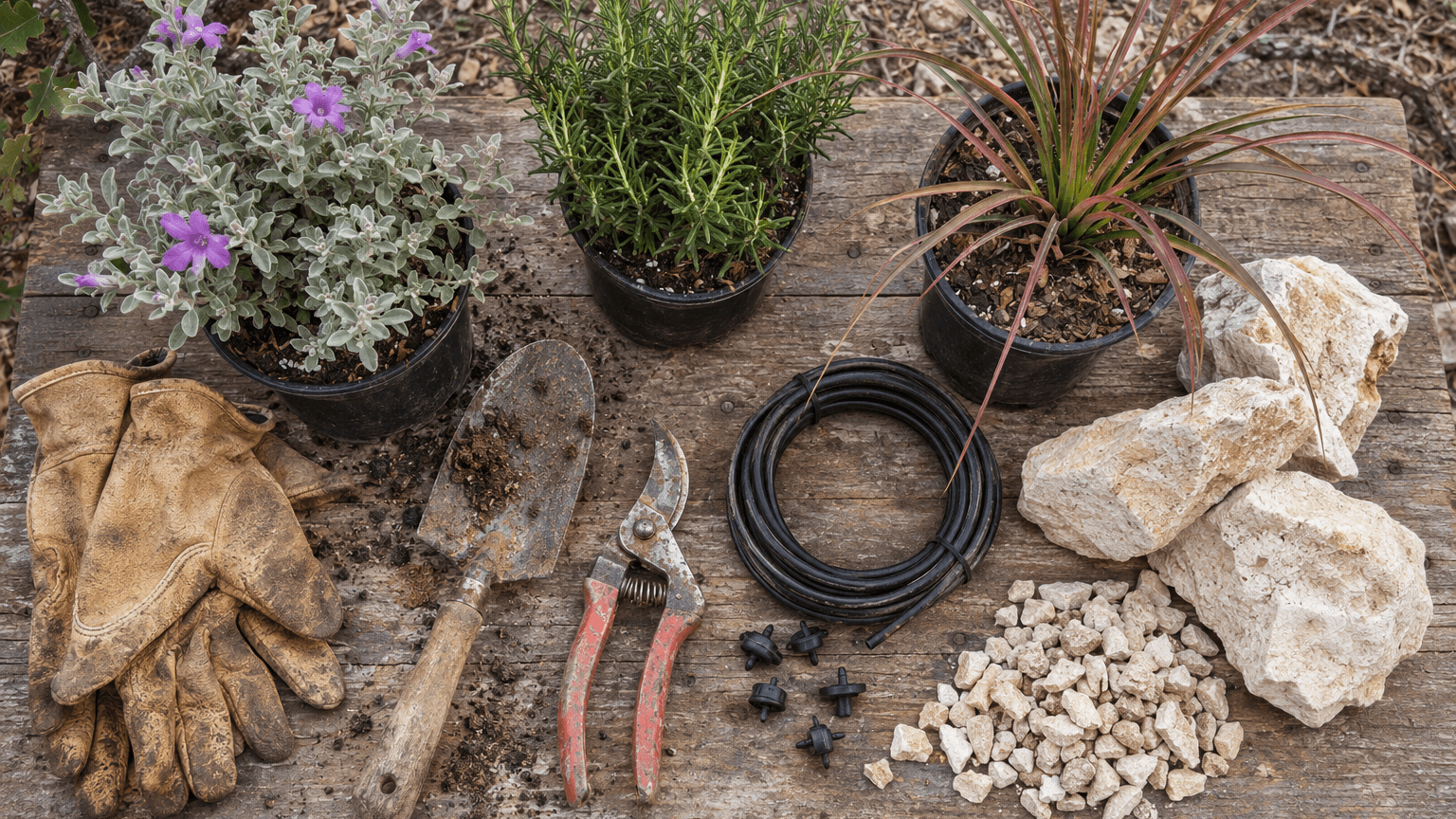
The Wildflower Center says deer tend to avoid aromatic plants, plants with tough, hairy or prickly leaves, and plants with milky sap, and that prairie grasses get browsed less than blooming plants. It lists native Central Texas plants it rates as highly resistant. Several of them also appear on a Williamson County AgriLife Extension bulletin of deer-resistant landscape plants:
- Texas mountain laurel, a native evergreen shrub
- Agarita, a prickly native shrub
- Autumn sage, a native perennial
- Red yucca (the bulletin notes deer eat its flowers)
- Lindheimer's muhly, a native ornamental grass
- Blackfoot daisy, a low native perennial
That is a short list, not a promise. Deer pressure varies from one property to the next, and a plant one neighbor never loses may get sampled on yours.
Young trees need protection
The Williamson County bulletin is blunt about trees: it says no large tree has been observed to be resistant enough to leave unprotected. Its advice is to cage young trees until they grow taller than the deer. If you are planting trees on acreage, build the cages into the budget on day one.
Fencing is the one method that works best
AgriLife Extension county agents call exclusion, keeping deer out of the area, by far the most effective way to protect a landscape, and a tall fence is how it is done. Repellents cost less, but the same agents say they work only under certain circumstances, and not at all when food is scarce. A fence, a short list of resistant plants and caged trees together will protect a property better than any one of them alone.
How we plan for it
Clay, heat, water restrictions and deer pressure shape the plant list at Pioneer from the first walk of the property. You see the planting plan as a rendering and approve it before any work starts, and the irrigation is zoned to that plan. New plantings get temporary irrigation while they establish, which matters because a stressed plant is a weak plant, whether the stress comes from heat or from being browsed. One company handles the design, the irrigation, the stone and the planting, so the plant list and the rest of the plan are drawn together.
If you are planning a landscape for a larger property or a new home in Seguin, New Braunfels, San Marcos, La Vernia or Stockdale, see how we handle design and installation or tell us about your property.