Retaining Walls in Seguin: When a Sloped Lot Needs One and What Makes It Last
A slope is not always a problem. A gentle grade can look good and drain well. But some slopes ask for a retaining wall, and a wall built wrong tends to show it within a few wet seasons.
When a slope needs a wall
A wall earns its place when the ground is trying to go somewhere it should not. A few signs to watch for:
- Soil washing out of a bed or down toward the house after heavy rain.
- A grade change too steep to mow, plant or walk comfortably.
- Flat ground you would like to use for a patio, play area or garden, with a drop right behind it.
- A bank cut for a driveway or new build that is slumping or bare.
If a slight regrade or a swale solves the problem, you may not need a wall at all. That is worth asking about before anyone quotes you one.
Why drainage decides everything
A retaining wall holds back soil, and soil holds water. Much of the ground around Seguin is heavy clay that drains slowly, and wet clay pushes harder on a wall than dry soil does. The wall that fails is usually not the one that looked weak. It is the one with no way for water to get out from behind it.
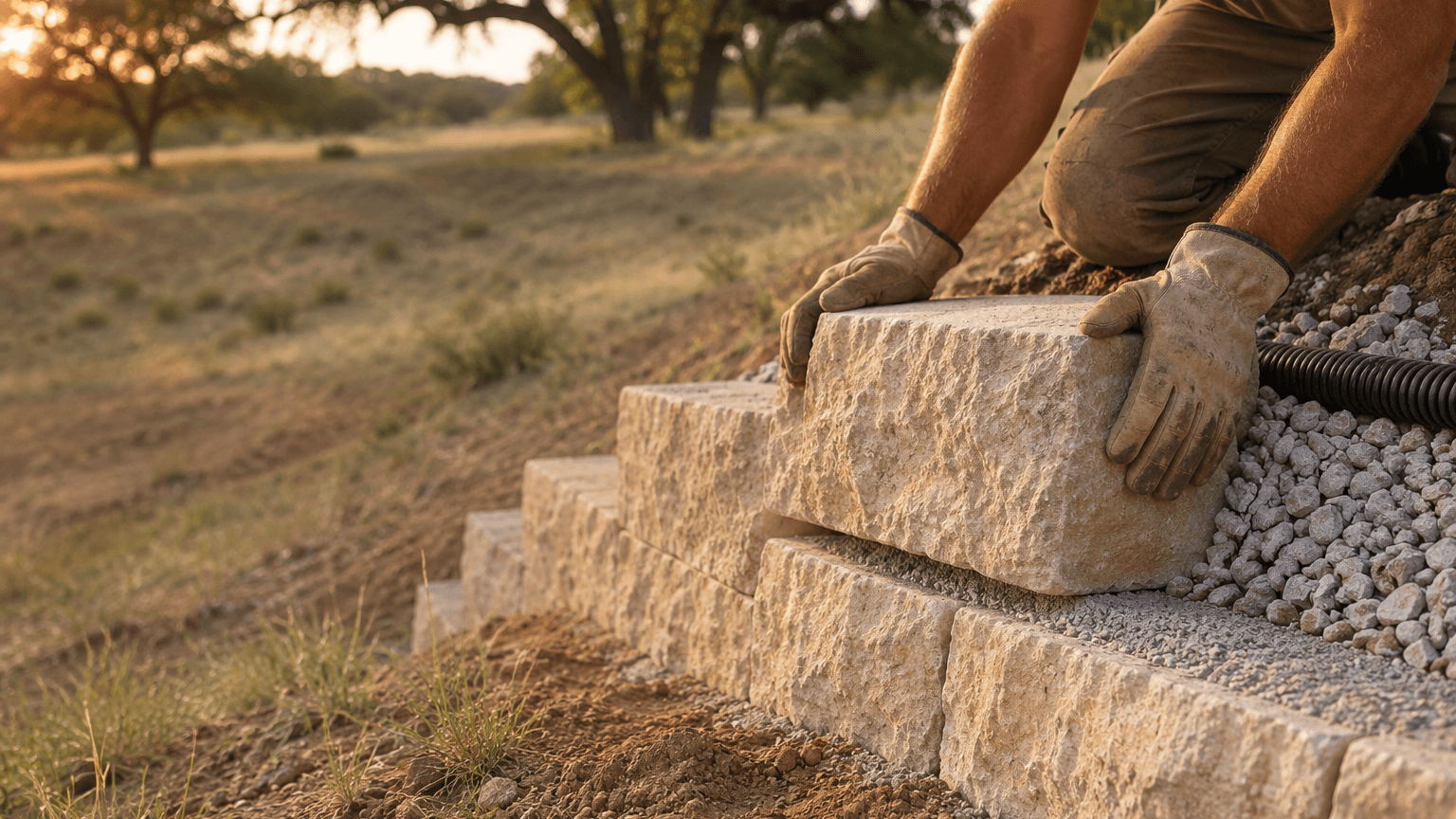
That is why a well-built wall has a drainage layer behind it. Clean gravel against the back of the wall gives water somewhere to go, and a way to carry that water out, such as a drain line or weep openings, keeps pressure from building. Ask any builder how water exits the wall. If the answer is a blank look, keep looking.
The parts you cannot see
Most of what makes a wall last is buried or hidden:
- A prepared base. The first course sits on compacted material, not on loose topsoil.
- A buried first course. Starting the wall slightly below finished grade helps keep it from creeping.
- Backfill that drains. Gravel directly behind the wall, not the same clay that was dug out.
- A little lean. Walls set back slightly into the slope resist the load better than walls stacked straight up.
Material and height
Raised limestone beds and stacked stone suit this part of Texas and sit naturally against the local landscape. Whatever the material, taller walls carry much more load than short ones. A low garden wall and a wall holding back a real change in grade are different jobs. For anything tall, or anything near a structure, a driveway or a property line, ask whether the design needs an engineer's review and whether your city requires a permit. Those answers come from the city and a qualified professional, not from a landscaper's guess.
Plan it with the rest of the property
A wall changes where water flows, where you plant and where you walk. Grading, drainage and the wall should be settled together, before planting, so nothing gets torn out later. Cooler months are a good time to do this kind of earthwork and stone, and planting can follow once the structure is in.
What to ask before you hire
- How will water drain from behind the wall?
- What is under the first course?
- Who handles the grading, and who handles the stone?
- How does the wall fit the planting and irrigation plan?
At Pioneer Landscapes, retaining walls, raised limestone beds, grading and drainage all fall under one company, planned with the design rather than added to it. Every job starts with a free site walk.
If you have a sloped lot in Seguin, take a look at our stone and hardscape work and start a conversation.