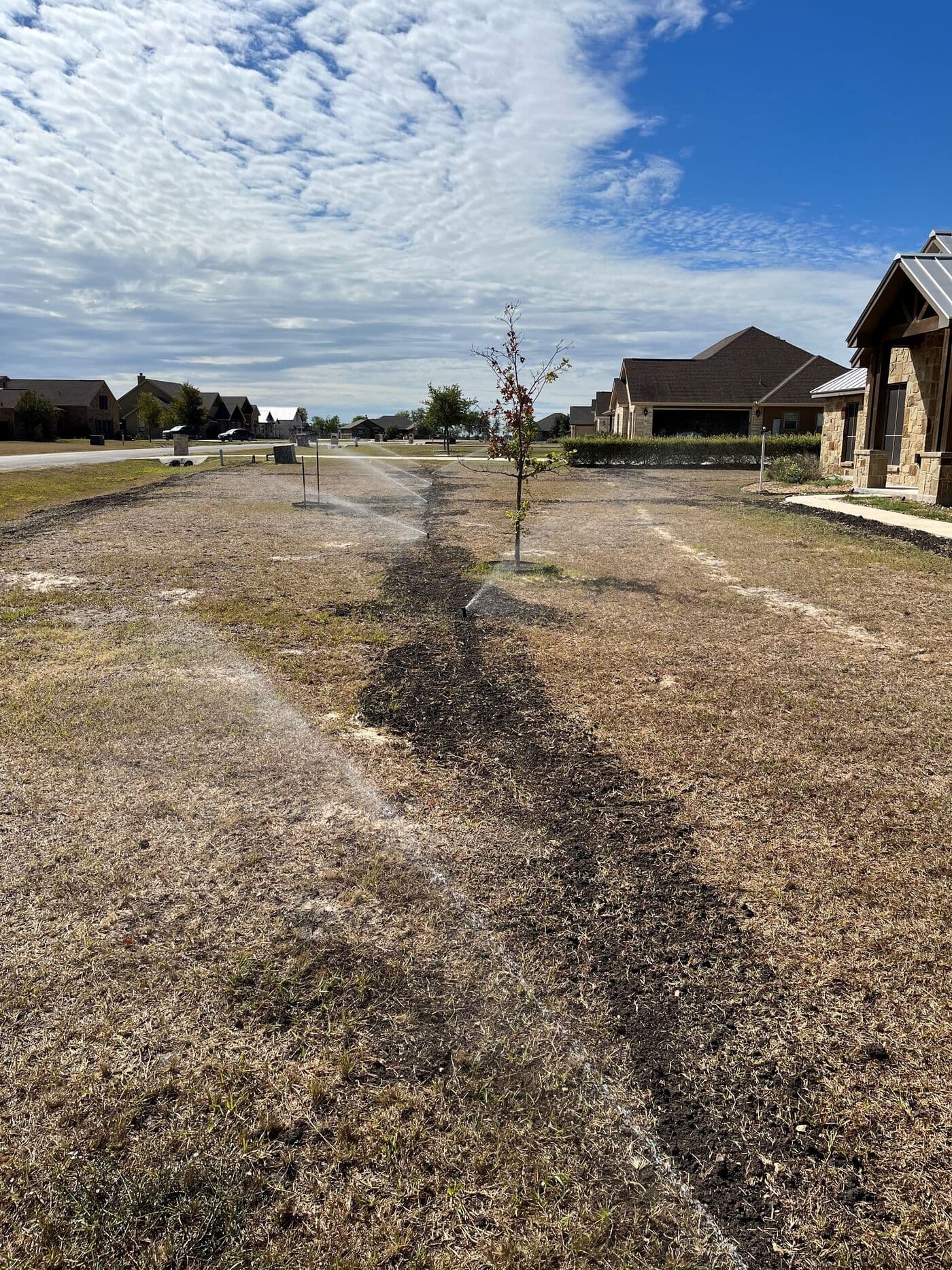
When people compare irrigation quotes they usually compare head counts, because it is the only number on the page that looks comparable. It is close to meaningless. A system is not a collection of sprinklers, it is a set of decisions about which parts of the property get watered together.
Zones are the whole design
A zone is a group of heads that run at the same time for the same length of time. Everything on a zone therefore gets exactly the same amount of water, whether it wants it or not.
That is fine if everything on the zone has the same need. It rarely does. Turf in full sun, a bed of established shrubs, and a newly planted tree want three different things. Put them on one zone and you will run it long enough to keep the grass alive, which means the shrubs sit wet all summer, or you will run it short and lose the lawn.
This is the most common fault we find in existing systems, and it is not a repair. Adding heads does not fix it. The zones were drawn around the plumbing rather than around the planting.
What a zone should be drawn around
- Sun and shade. The south-facing strip against the drive and the shaded run under the oaks are not the same watering problem.
- Plant type. Turf, beds, and trees want different volumes on different schedules. Drip in the beds and spray on the turf is not a luxury, it is the point.
- Slope. Water applied faster than the ground can take it runs downhill and waters the bottom of the slope twice.
- Establishment. New plantings need more water than the same plants will need in three years, which is easier to give them if they are not sharing a zone with the lawn.
Pressure is finite
The other half of the problem is hydraulic. Every head on a zone shares the available water. Put too many on and none of them throw their rated distance, so the pattern that looked complete on paper leaves dry rings between heads. Those dry patches then get blamed on the grass.
On acreage this gets worse, because the runs are longer and pressure drops over distance. A layout that works on a quarter-acre lot in town does not transfer to a property where the far corner is a few hundred feet from the valve.
How to tell if a system is actually working
Run each zone and walk it. Not the controller, the ground. You are looking for whether the spray from one head reaches the next one, whether anything is watering the drive or the fence, and whether the pattern goes dead in the middle of a run.
Then look at the plants. Persistent dry spots in the same place every year are almost never a plant problem. Beds that stay soggy while the lawn browns are a zoning problem. Both are worth solving before anyone spends money replacing what died.